Podcast Review: Operation Night Cat
Some Background
I worked in theatre for about ten years. It’s an interesting thing, becuase most people assume that people in the industry are all of a certain type. We’re all bleeding-heart, city-folk. I laugh, because theatre is as diverse as any industry. I think the exposure to stories and the outcast types that theatre brings inherently just makes those in the industry a lot more accepting of more people. If you come in, get your job done, and are nice, there’s a lot we can figure out in the in-between.
There’s this stereotype of the industry that raised me in my younger adulthood years. This belief has people “on the outside” sometimes being surprised when I talk about bringing home venison. I’ve seen the calculations happening behind the eyes, that sort of “excuse me, what?”. Especially because I do make vegetarian meals often - I like veggies, and life is about balance, isn’t it?
I have a deep respect for hunters and hunting culture. I grew up witnessing the reverence of the sport, those who take seriously the fact that what they’re doing is taking one life to sustain another. An ethical hunter reduces the suffering of an animal, and they don’t take more than nature can provide. They care for the world that cares for them. They also speak for it in being ethical hunters who follow the law. The Pittman-Robertson Act, passed in 1937, sends revenue from a tax on firearms, ammunition, and other equipment to state wildlife agencies. Since the passing of this act, it has contributed more than $14 billion to conservation - and that’s just from that tax. That doesn’t include licensing fees, and other hoops someone has to jump through to become a hunter. All of these fees and taxes, I don’t hear them complain much about it. Sure, no one likes paying taxes, but these contribute directly to maintaining population records, public lands, and more.
I say this because a lot of people have become removed from the hunting traditions that certainly wove through their family histories. I also say this because poaching is also misunderstood. Poaching is the act of illegal hunting, which seems obvious. It’s rhino hunters and the crime rings far away, providing a certain raw material to the black market. In reality, poaching can be as simple as using the wrong weapon to kill game at the wrong time, miscounting tags, or not being up to date on a changed law. That can be an easy mistake, so most people don’t consider it poaching despite the technicality. Generally, the title of poacher is reserved for the purposeful and unethical actions to skirt the law.
Into the Podcast Review
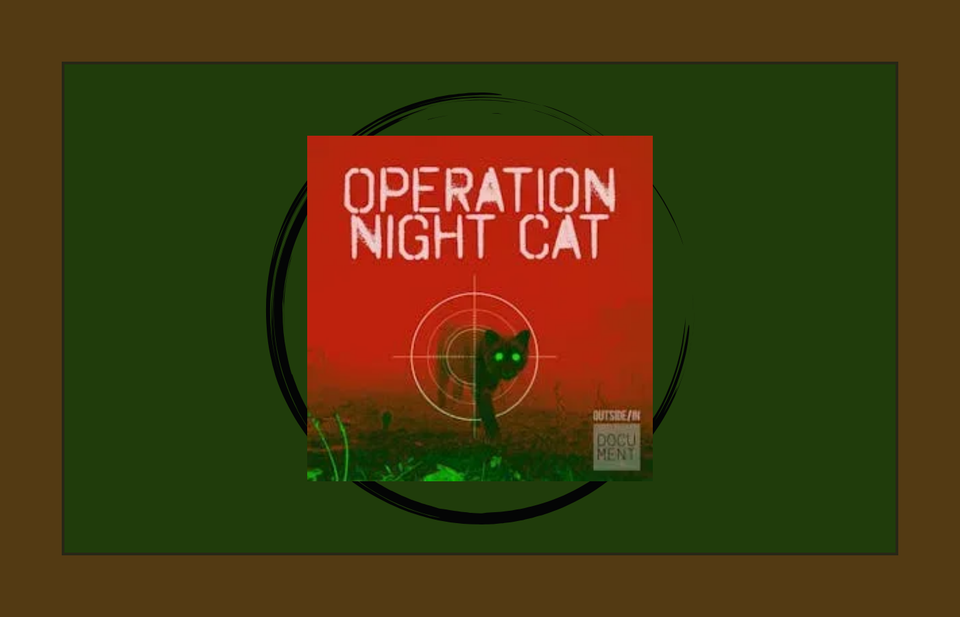
Which is what investigators from the New Hampshire Fish and Game department thought they were walking into when they spied a line of deer heading to a residential back yard. Operation Night Cat from the Document Team at NHPR is a three-part special series from Outside/In. This podcast follows how an investigation into baiting deer turned into a bigger issue than poaching. The first step was noticing a bait, the second, discovering hunting crimes being committed across state lines, and then finally, crimes being committed by officers of the New Hampshire Department of Corrections within the jails they serve. These poachers weren’t just any guys giving hunting a bad name. Their crimes and cruelty seeped in and out of their careers as law enforcement officers.
The institution for policing is a mess and is broken. Corrections is not a part of the system that is insulated from this, but the issue is also that the individuals serving in this capacity also tend to see the worst in people. Presumably, being incarcerated retains a level of guilt. These officers have to manage respect for people who are learning from mistakes, side by side with people who everyone agrees shouldn’t be a part of the general public. Add to that the same systemic issues we also see outside of corrections: understaffing, inadequate training, and feeling like they’re being attacked from all sides - I see how the job could absolutely get to people. The thing is, when the job gets to someone, it’s up to everyone around them, and this broken system, to hold all of these officers accountable.
The podcast leads to that question. What happens when we don’t hold people to a higher standard when they should be? What happens when the legal system protects those who shouldn’t be protected in a way that damages the whole?
Things aren’t done with this story - charges haven’t been brought with the speed one would hope, even though people did lose their jobs. It all feels dissatisfying, and for what?
Operation Nightcat is one of those podcasts that forces us to chew on these issues, with no resolution. There is nothing to face other than our own systemic ills. It’s a well told story that leads us to more questions, and more discomfort than satisfaction. The three-episode special packs more of a punch than many six-part series. The balance and pace of the telling, pieced together with the gritty texture of an investigation in the back-woods of the northeast, leaves a mark. There’s something about the grit of the original audio, the fact that the producers read from text messages rather than actors, and the subject matter - that all ties this into a piece that makes us think as much as it makes us feel.
NHPR is one of my favorite producing bodies, because they care about the subject matter - and they care about telling a story that reflects more than the facts. There is texture and feel that layer in detail that would get lost outside of the subtlety of audio. This podcast is no different. The Document Team truly did an exemplary job with this series, and only time will tell what more they have ready for us.
TLDR Review:
Episodes: Three
Episode Length: 30-45 Minutes
Genre: True Crime
Vibes: Journalistic, deep dive, serious
Read more critic reviews of Operation Night Cat over at Great Pods
I've written over one hundred reviews in the last five years of doing this. Every single review is free, and nearly every podcast I review is free. If you like what I do, consider throwing me a tip on my Support Page so I can keep doing this.
Subscribe below for monthly updates on my writing, and my view of podcasting from my corner of the world.



Comments ()